
One Lap at a Time
Matt Stevens · September 12, 2026
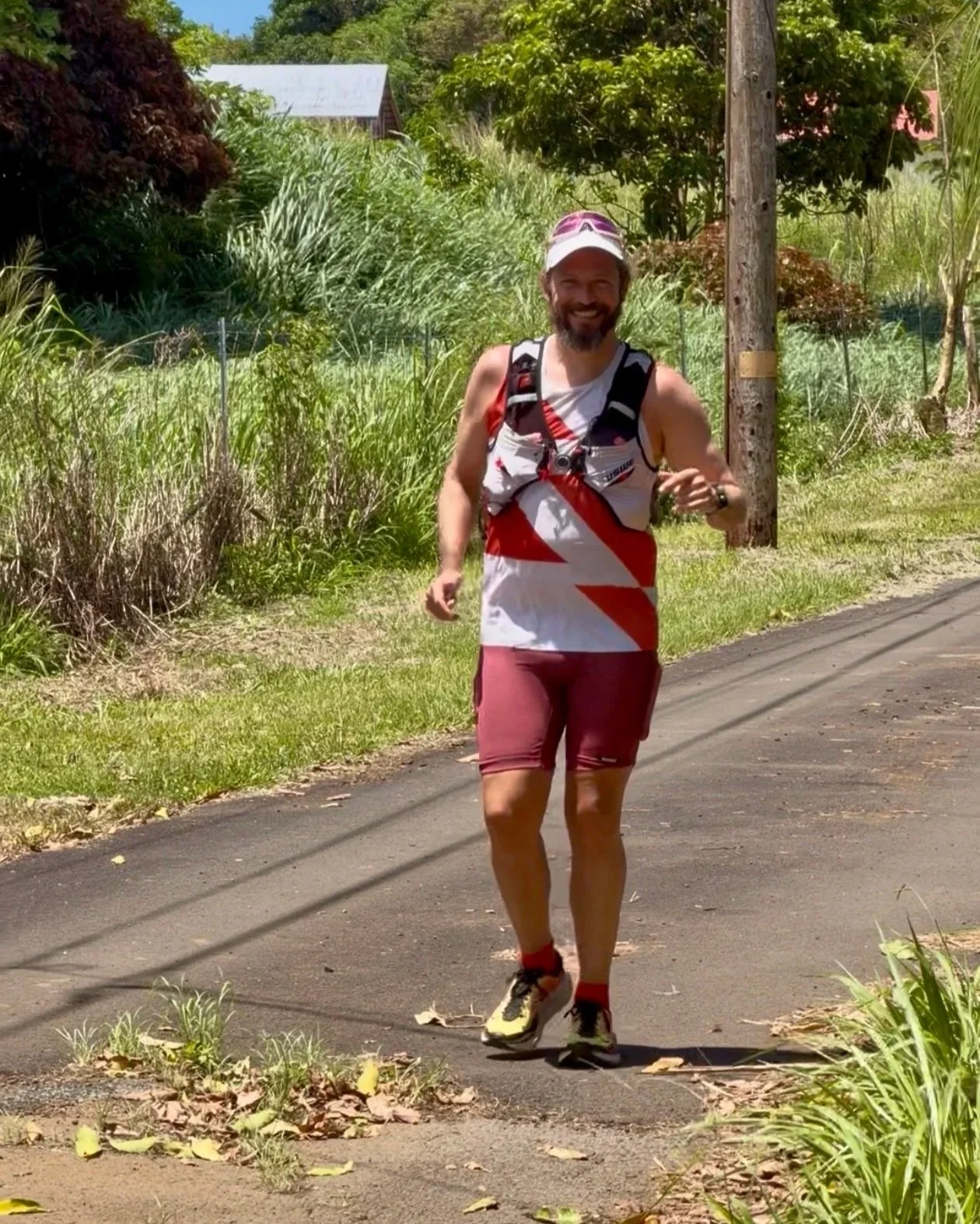
Yesterday I gave myself a different kind of 44th birthday present: a one-person backyard ultra marathon.
Backyard ultras are usually “last person standing” races. Everyone completes the same 4.167-mile loop on the hour, every hour, until only one runner remains. There is no predetermined distance and no fixed finish time. You simply keep returning to the starting line until you decide you can’t—or don’t want to—continue.
I’ve been intrigued by the format for a while, but I found myself wondering what would happen if you removed the competition completely.
If there is only one entrant, what does “last person standing” even mean? What makes you choose another lap when there is nobody to beat, no finish time to chase, and no predetermined distance you have to reach?
So I decided to find out.
I set up a race-worthy aid station tent in my front yard, stocked it with food and hydration, and started at 3 a.m. I gave myself four rules: stay gentle, fuel well, listen closely, and decide one lap at a time whether I genuinely wanted to continue.
The last rule was the experiment.
I deliberately did not decide that I was running a marathon, 50 kilometers, 50 miles, or any other particular distance. Setting a target would have changed the question. Instead of asking What am I experiencing, and do I want to continue?, I would inevitably have started asking Can I make it to the number I decided mattered?
Those are different questions.
For nine hours, I ran the loop, returned home, ate and drank, rested for whatever time remained, and started again at the top of the next hour.
As the miles accumulated, I became tired. But without a predetermined finish line, fatigue itself wasn’t success or failure. It was information. So was hunger. So were my legs. So was my mood. Each lap gave me a little more evidence with which to make the next decision.
Eventually, after nine laps and just over 38 miles, I decided I was done.
I was tired, but still strong. I hadn’t discovered the absolute limit of what I could endure, and I hadn’t failed to reach some number I had chosen before starting. I had simply reached a point where continuing no longer felt necessary to answer the question I had set out to explore.
I find myself increasingly drawn to experiences like this—not recklessness or pushing blindly past limits, but deliberately creating conditions that allow me to enter a space where I don’t know the answer yet.
That requires an interesting combination of structure and openness.
I didn’t approach the run without preparation. I have years of endurance training behind me. I planned my route, built an aid station, thought carefully about fueling, and established rules intended to keep the experiment safe and sustainable. There was plenty of evidence informing the decision to begin.
What I refused to decide was where that evidence had to lead.
That distinction feels increasingly important to me beyond endurance sport.
We are often encouraged to begin with the destination: define the outcome, establish the metric, build the plan, execute against it. There is good reason for that. Clear goals can focus attention and make progress visible.
But not every worthwhile question has an answer we can define in advance.
Sometimes the most useful thing we can do is create good enough conditions to begin, pay close attention to what happens, and allow what we learn to inform what happens next.
I’ve been thinking about this lately as the relationship between evidence and curiosity.
Evidence tells us what we know now. It gives us footing. It helps us understand the conditions around us and make decisions grounded in something more substantial than instinct or hope.
Curiosity does something different. It keeps us from mistaking what we currently know for the boundary of what is possible.
The two need each other.
Curiosity without evidence can become speculation. Evidence without curiosity can become a constraint: a remarkably sophisticated explanation of why the future must resemble the past.
The interesting territory, at least for me, is somewhere between them. Know enough to take the next step. Stay open enough to notice when the step teaches you something you didn’t expect.
Yesterday morning, I had plenty of evidence about myself as an endurance athlete. None of it could tell me how far I would run that day.
For that, I had to start.
Nine laps and 38 miles later, I knew something I hadn’t known before.
Yesterday gave me some new evidence.
I’m curious what comes next.